



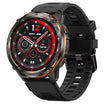
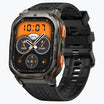
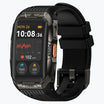
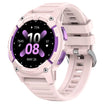
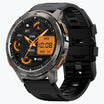
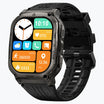
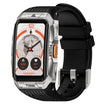
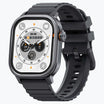
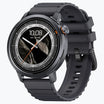
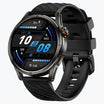
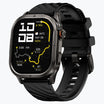

A rugged smartwatch can help you run without your phone, but only when the right features work together. It needs to track your run, play music, connect to your headphones, and send the workout to Strava after you finish.
That sounds simple, but many watches fail one part of the setup. Some track runs well but cannot play music without a phone. Some control music, but the music still comes from your phone. Some look tough, but the GPS or battery is not strong enough for outdoor runs.
So the goal is not to find the watch with the longest feature list. The goal is to find a durable smartwatch that fits the way you actually run. For this type of user, that usually means a military-grade style, built-in GPS, Strava sync, offline music, Bluetooth audio, and enough battery for real training.
The Core Features That Make Phone-Free Running Work
A good phone-free running watch should remove your phone from the run, not just reduce how often you touch it. That means the watch has to do the main jobs by itself.
It should record your route with built-in GPS. It should store the workout after you stop. It should play music from the watch, not from the phone. It should connect directly to Bluetooth headphones. After the run, it should move your workout data into Strava.
| What You Want to Do | What the Watch Needs |
|---|---|
| Run without carrying a phone | Built-in GPS |
| Save your route and pace | GPS workout tracking |
| See the run in Strava | Strava activity sync |
| Listen to music while running | Offline music storage |
| Use wireless headphones | Direct Bluetooth audio |
| Finish the run safely | Good GPS + music battery life |
| Handle sweat and outdoor use | Rugged build and water resistance |
This is where many users buy the wrong watch. They see “sports modes,” “music control,” or “Strava compatible” and think the watch can replace their phone. Those words are not enough. The better test is this: can this watch handle the whole run without my phone in my pocket?
That question will save you from choosing a watch that looks right but still depends on your phone.
How Strava Sync Should Fit Into Your Running Setup
Strava sync should make your finished run easy to review, share, and compare. The watch does not always need to run the Strava app directly. For most runners, the more important thing is that the saved workout can sync to Strava after the run.
A useful setup looks like this: you start the run on the watch, the watch records your GPS route, you save the workout, then the companion app sends the activity to Strava. That is the flow most runners actually need.
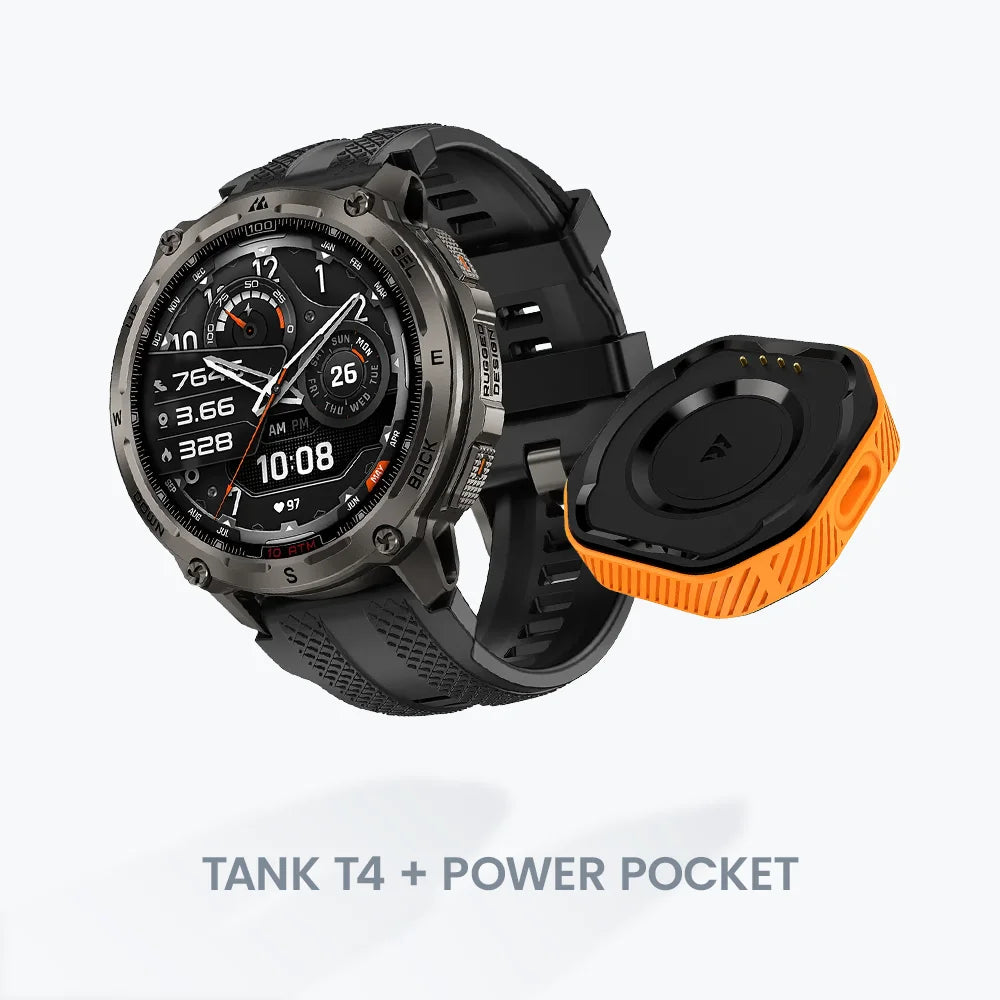
KOSPET TANK T4 is a good example of this kind of setup. The watch records the workout first, then uses the Apexmove system to manage workout data and sync fitness records to third-party apps like Strava. For the user, the value is not “Strava” as a word on the product page. The value is that the run does not stay trapped inside the watch app.
The main thing to check is the type of data that syncs. A running user needs more than steps or calories. Good Strava sync should include useful workout details such as route, distance, pace, duration, and heart rate. Those are the numbers runners use to understand whether a route felt slow because of effort, weather, hills, or poor pacing.
So do not only ask, “Does it support Strava?” Ask, “What run data actually gets sent to Strava?” That is a better buying question.
How Offline Music Changes What Watch You Should Buy
Offline music changes the watch you need because it decides whether your phone can really stay home. A watch that only controls phone music does not solve the problem. It still leaves your phone as the real music player.
This is one of the big traps in smartwatch shopping. “Music control” sounds useful, but it only means the watch can pause, skip, or adjust music from your phone. That is fine for daily use. It is not enough for phone-free running.
For running without a phone, the music needs to live on the watch. That can mean local music files, stored songs, or supported offline playlists. The watch also needs enough storage to hold music, and the music setup should not be painful every time you want to update your songs.
KOSPET TANK T4 gives a clearer example of what to look for. It offers 32GB storage for songs and offline maps, so the watch is not just acting like a remote control. That matters for runners who want to leave the phone at home but still run with music.
| Product Claim | What It Usually Means | Good for Phone-Free Runs? |
|---|---|---|
| Music control | Controls phone audio | No |
| Music storage | Stores songs on the watch | Yes |
| Offline playlists | Plays downloaded playlists | Yes, when supported |
| Streaming only | May need phone or network | Not always |
The music feature should match your habit. A runner who already uses local files may care more about storage. A runner who uses Spotify should check whether offline playlists are supported on that exact watch and app system. A runner who only wants a few playlists for training needs a simpler setup than someone who wants a large music library.

Battery Life Should Match Your Real Running Time
Battery life should be judged by your run, not by the biggest number on the product page. A watch may last many days in normal use, but running uses more power.
GPS tracking drains battery. Music playback drains battery. Bluetooth headphones also add power use. When all three are active, the watch works much harder than it does during normal daily wear.
So the useful question is not: how many days does the watch last? The better question is: can it last through my normal run with GPS and music turned on?
A 30-minute runner does not need the same battery as a trail runner. A runner training for longer routes needs more safety margin. A person running after work may only need one hour of strong GPS and music use. Someone doing long outdoor sessions should care much more about GPS battery life.
| Running Habit | Battery Need |
|---|---|
| Short daily runs | GPS + music should feel easy |
| 60-minute training | Stronger running battery matters |
| Long road runs | GPS endurance becomes important |
| Trail or outdoor routes | Battery and GPS stability both matter |
The mistake is buying based on standby time. Standby time tells you how long the watch may last as a daily device. It does not tell you how well it handles your real workout. For this topic, GPS + music battery life is the number that matters most.
Rugged Build Should Match Real Running Conditions
A rugged smartwatch should be tough in ways that help during real runs. A military-grade style may catch your eye, but style alone does not make the watch useful for outdoor training.
Running is rough in small, repeated ways. Sweat reaches the buttons and strap. Rain hits the screen. Dust collects around the case. The watch may scrape against a jacket, backpack, gym bag, truck door, or wall. None of these moments may destroy a watch at once, but they test it over time.
That is why rugged build should mean more than a large case. Look for water resistance, dust protection, a tough case, durable glass, and buttons that are easy to press while moving.
Physical buttons are easy to ignore before buying, but runners notice them fast. Wet fingers and sweaty hands make touchscreens harder to use. Buttons make it easier to start, pause, mark a lap, or go back during a run.
The best rugged running watch should feel ready for training, not just strong in photos. It should be comfortable enough to wear often, but tough enough for sweat, rain, dust, and daily knocks.
Compare Rugged Watches by Running Scenario
The right rugged smartwatch depends on your running style. A watch with more features is not always the better choice. The better watch is the one that fits your most common run.
A short-distance runner may care more about comfort and easy music. A Strava-focused runner may care more about GPS data and clean activity sync. A trail runner may care more about battery, buttons, route tracking, and durability.
| Running Scenario | What to Prioritize |
|---|---|
| Short daily runs | Comfort, GPS, offline music |
| Strava-focused training | Full activity sync and GPS data |
| Music-first running | Storage and Bluetooth audio |
| Long outdoor runs | GPS battery life |
| Trail running | GPS stability and rugged build |
| Rough daily use | Durable case and physical buttons |
This is where the buying decision becomes clearer. A watch does not need to be the best at everything. It needs to be strong in the areas that affect your run.
For this user, the most important combination is clear: built-in GPS, Strava sync, offline music, Bluetooth headphones, and rugged build.
A watch missing one of those pieces may still be good, but it may not solve this exact problem.
Rugged Smartwatches That Fit These Requirements
A rugged smartwatch that fits this need should not only look tough. It should support the full phone-free running setup: independent GPS tracking, Strava activity sync, offline music, Bluetooth audio, and real outdoor durability.
Here are a few rugged smartwatch options that match this type of runner:
KOSPET TANK T4: Best for Phone-Free Outdoor Runs

KOSPET TANK T4 is a strong match for runners who want one rugged watch for outdoor running, route tracking, music, and Strava sync.
- Dual-band six-system GNSS for more reliable outdoor route, pace, and distance tracking.
- Offline maps for exploring new routes without relying on your phone.
- GPX/KML route import for following planned running or outdoor routes.
- 32GB storage for offline music and map storage.
- Strava sync through Apexmove for moving workout records into Strava after the run.
- Rugged build for sweat, rain, dust, bumps, and outdoor training.
For this search intent, TANK T4 fits best when the user mainly wants a rugged running watch that can track routes, store music, and sync training data after the run.
FAQs
Does Strava sync mean the watch has the Strava app?
Not always. Many watches record the run first, then sync the workout to Strava through a companion app. For most runners, full activity sync is more important than having the Strava app directly on the watch.
What is the difference between music control and offline music?
Music control only lets the watch control songs playing on your phone. Offline music means the songs or playlists are stored on the watch, so you can listen without carrying your phone.
Do I need Bluetooth headphones for phone-free running?
Yes. If you want to listen to music without your phone, the watch needs to connect directly to Bluetooth headphones. Offline music is only useful when the watch can also send audio to your earbuds.
What battery life should I check before buying?
Do not only look at daily battery life. For running, check how long the watch lasts with GPS tracking, music playback, and Bluetooth audio working at the same time.




Leave a comment
All comments are moderated before being published.
This site is protected by hCaptcha and the hCaptcha Privacy Policy and Terms of Service apply.