



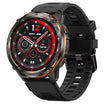
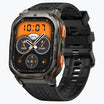
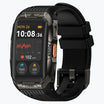
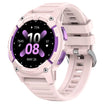
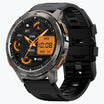
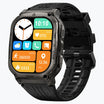
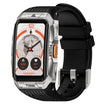
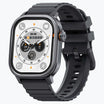
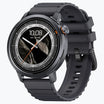
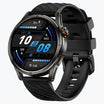
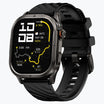

A smartwatch significantly improves your training because it replaces confusing feelings with exact facts about your body. Most people run until they feel tired, but feeling is often a liar. Some days you feel fast but your heart is working too hard.
Other days you feel sluggish but your body is actually ready for a breakthrough. A running smartwatch takes away this confusion by showing you exactly what is happening inside your heart and muscles.
Controlling Training Intensity with Heart Rate Data
Using the heart rate sensor on your watch helps you build a stronger engine by keeping you in the correct intensity zones.
Your heart responds to exercise in different ways depending on how fast it beats. If you do not track your beats per minute, you will likely run at a medium speed that is too fast to help you recover but too slow to make you truly fast.
- Building an Aerobic Base in Zone 2: You should keep your heart rate between 130 and 145 beats per minute for most of your runs. This intensity triggers your body to grow more tiny blood vessels and energy factories in your muscles. This is why experts say you must run slow to get fast. It builds a foundation that allows you to run longer distances without getting tired.
- Increasing Your Speed in Zone 4: Once a week, you should push your heart rate to between 165 and 175 beats per minute. This trains your lungs and heart to move oxygen as fast as possible.
The running watch makes this easy by vibrating the moment you go too fast or too slow. This immediate feedback ensures that every minute you spend running is actually helping you reach your specific goal.
Improving Running Efficiency with Live Cadence Feedback
Your running watch helps you fix your running form by tracking your cadence, which is the number of steps you take every minute. Many runners take steps that are too long. This is a problem because it causes your heel to strike the ground far in front of your body, which acts like a brake and puts heavy stress on your knees.
- The Power of 180 Steps per Minute: A target of 170 to 180 steps per minute is the best way to run efficiently. When you take more steps, your feet land directly under your hips. This allows your muscles to act like springs and push you forward instead of slowing you down.
- How to Use the Metronome Tool: You can turn on a metronome feature on your watch that beeps at your target rhythm. You simply match your footsteps to the sound of the beep.

By focusing on this number, you reduce the impact on your joints and save energy. You will notice that you can run at the same speed while using less effort.
Also Read: How to Choose a Waterproof Outdoor Watch for Hiking and Running
Managing Training Load and Recovery Readiness
Smartwatches help you avoid injury by calculating exactly how much rest you need based on your nervous system. Progress does not happen while you are running. It happens while you sleep and recover.
Your watch measures Heart Rate Variability, which is the tiny difference in time between each heartbeat, to see if your body is truly ready for more work.
| Metric | Target Value | How it Helps You |
|---|---|---|
| Recovery Timer | 0 Hours | Tells you the exact wait time before your next hard workout. |
| Training Readiness | Score above 80 | Confirms that your body is fully repaired and ready for a fast run. |
| Sleep Quality | Score above 75 | Ensures you had enough deep sleep to repair muscle tissue. |
Following these numbers removes the guilt of taking a day off. If your watch shows a 48-hour recovery warning, it is a clear instruction to rest. This data-driven approach keeps you healthy so you can train for months without getting sidelined by pain.
Reviewing Progress Across Different Running Stages
The watch records every mile so you can see long-term trends that prove your fitness is improving. It is difficult to feel your heart getting stronger day by day, but the watch makes these changes visible through specific scores.
- For Beginners: You should focus on your VO2 Max score. This is a number that represents how much oxygen your body can use. Seeing this score move from 35 to 40 over a few months is proof that your heart and lungs are physically getting stronger.
- For Intermediate Runners: You can compare your heart rate to your pace. You might notice that running at a 9-minute mile pace used to require a heart rate of 160 beats per minute, but now it only requires 150 beats per minute. This means your body has become more efficient.
- For Advanced Runners: You can track your Training Status to see if you are peaking for a race. The watch compares your current effort to your history to tell you if you are ready to set a new personal record.
Conclusion
The primary benefit of a smartwatch is that it turns running into a science that you can control. It stops you from making the mistakes that lead to burnout and injury. By following specific targets like 140 beats per minute and 180 steps per minute, you ensure that every run is helping you get better. A smartwatch does not just track where you have been. It provides the data you need to reach your goals faster and safer.
FAQs
How tight should the watch be for accurate data?
The watch should be snug enough that it does not slide around, and it should be about two fingers above your wrist bone. This helps the light sensor get a clear reading of your blood flow.
What is the most important number for a new runner?
Focus on your cadence first. Keeping your steps per minute between 170 and 180 is the best way to prevent common injuries like shin splints.
Do I need to check the watch constantly while I run?
No, you can set up vibration alerts. The watch will tap your wrist if you are running too fast or if your heart rate is too high, so you can focus on the road instead of the screen.




Leave a comment
All comments are moderated before being published.
This site is protected by hCaptcha and the hCaptcha Privacy Policy and Terms of Service apply.