




Horizontal coordinates tell you where you are on a flat map, but in the mountains, the vertical axis is what determines your safety and survival.
Most adventurers over-rely on standard GPS, ignoring that satellite-based altitude is notoriously inaccurate due to signal triangulation errors.
A dedicated barometric altimeter isn't just a gadget; it is the only sensor that provides the real-time precision needed to navigate steep terrain and anticipate life-threatening weather shifts before they arrive.
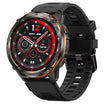
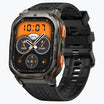
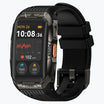
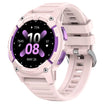
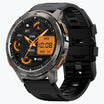
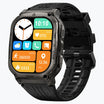
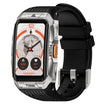
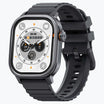
This guide analyzes how outdoor Sports watches with altimeter function as critical navigation tools and which models stand up to professional field use in 2026.
Why Every Adventurer Needs Watches with Altimeter
In blind navigation—such as heavy fog or whiteout conditions—your altitude is your most reliable "breadcrumb." If your topographic map shows a trail fork at 1,200 meters and your watch reads 1,100 meters, you know with absolute certainty that you haven't reached the junction, regardless of how your weary legs feel.
Relying on visual cues leads to errors, but tracking your elevation allows you to navigate by exclusion, cross-referencing vertical data with map contours to eliminate guesswork.
Field Tips
- Verification Rule: Never turn at a junction unless your watch altitude matches the map’s contour elevation within a 15-meter margin.
- Ascent Management: Calculate your "Vertical Meters per Hour" (Vm/h) to determine if you will reach the summit before the sun sets.
Understanding the Tech: Barometric vs. GPS Altimeter
High-precision outdoor watches must utilize a hybrid approach, combining a barometric altimeter with GPS altitude data to overcome the inherent limitations of each technology.
A barometric sensor is exceptionally sensitive to pressure changes, allowing it to detect a climb of just a few steps, but it "drifts" when weather systems change the local air pressure.
Conversely, GPS altitude remains stable regardless of weather but often suffers from vertical errors of 10 to 50 meters due to satellite geometry and signal obstruction.
Field Tips
- Prioritize hardware that features "Auto-Calibration," which uses GPS data to periodically correct barometric drift during long expeditions.
- Select devices with Dual-Band GPS (L1+L5) to improve the vertical accuracy of satellite-based height readings in deep canyons or dense forests.
Essential ABC Sensors: More Than Just Elevation Tracking
An altimeter operating in isolation is a blind sensor; it must be part of a synchronized ABC sensor system to be field-ready.
The barometer is the "intelligence" of this system, functioning as a localized early-warning station that detects atmospheric pressure drops independent of altitude changes.
When the barometer trends downward while you are stationary, it isn't an altitude error—it’s a warning of an incoming low-pressure front that could trap you on an exposed ridge.
Field Tips
- Storm Logic: Manually set your Barometer "Storm Alert" to trigger at a drop of 4hPa within 3 hours; this is the professional threshold for seeking immediate shelter.
- Redundancy Check: Ensure your watch has a physical MIL-STD-810H rating to guarantee the sensor's pressure membrane won't rupture at high altitudes or during rapid descents.
Field-Tested Recommendations: Top Altimeter Watches for 2026
The market has diverged into two camps: those focused on deep data integration and those prioritized for extreme survival and value.
Selection should depend on your mission duration and your reliance on offline mapping. High-end devices offer topographic overlays, while rugged smartwatches focus on sensor reliability and physical durability at a more accessible entry point.
| Category | Recommended Model | Core Advantage | Best For |
|---|---|---|---|
| The Expedition King | Garmin Fenix 8 Solar | Solar charging + Integrated Topo maps. | Long-term high-altitude expeditions. |
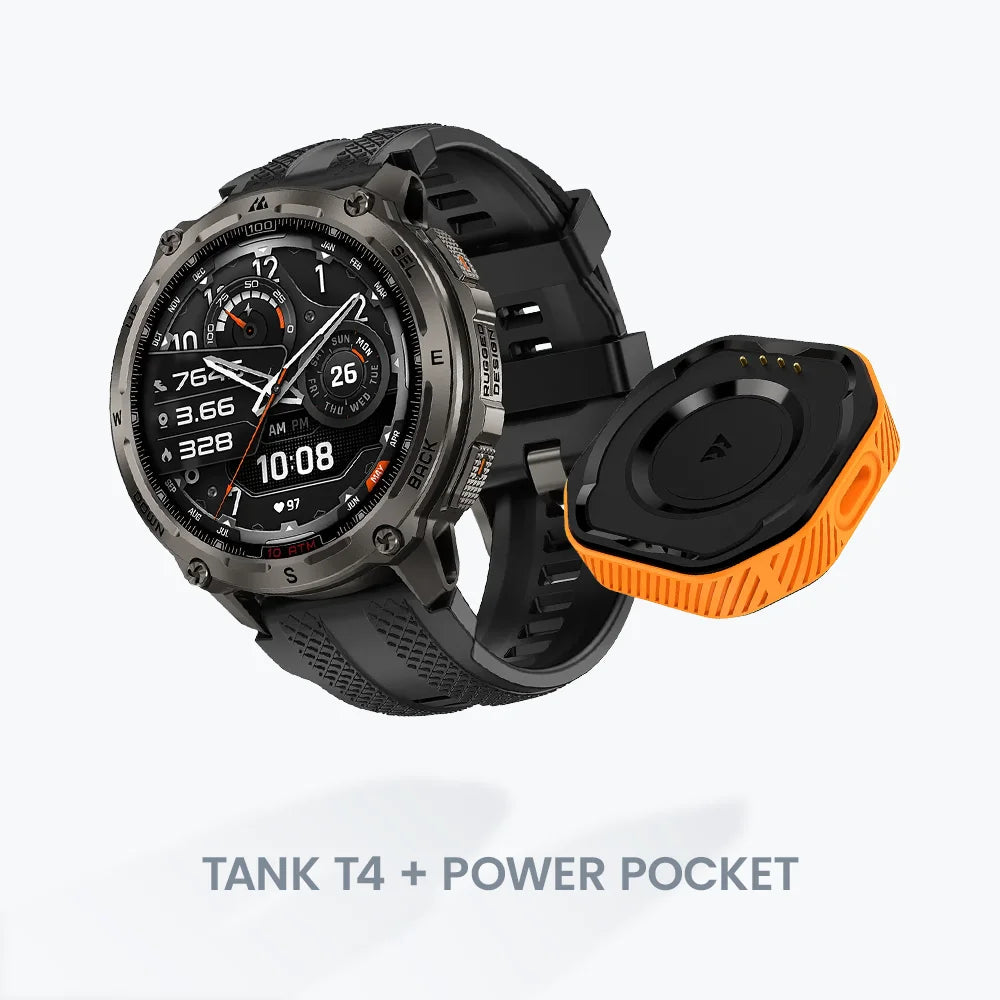
| The Rugged All-Rounder | KOSPET TANK T4 | Offline Maps + 9H Mohs hardness + Professional ABC. | Trail running, technical climbing. |
| The Budget Workhorse | KOSPET TANK T3 Ultra 2 | Dual-band GPS + 15-day battery + Extreme value. | Entry-level mountaineers. |
| The Minimalist Tool | Coros Vertix 2S | Minimalist UI + Industry-leading GPS algorithms. | Ultra-lightweight endurance sports. |
Field Tips
- Check for physical buttons; touchscreens are often unusable with gloves or in frozen conditions when you need to adjust altimeter settings.
- Verify the "Full GPS Tracking" battery spec; a reliable watch should offer at least 24–48 hours of continuous sensor recording to cover multi-day summits.
Professional Tips: How to Calibrate Your Hiking Watch for Accuracy
Let’s be clear: a barometric altimeter is a high-maintenance tool, and if you aren't calibrating it, the data is likely dangerous misinformation.
Because these sensors cannot distinguish between "climbing 50 meters" and "a cold front moving in," the reading will naturally drift throughout the day.
Professional-grade altimeter calibration isn't a suggestion; it is a ritual that must be performed multiple times during any significant ascent.
Field Tips
- Baseline Rule: You must perform a "Manual Offset" at the trailhead (where elevation is known) and again at every marked peak or pass.
- Calibration Frequency: On days with unstable weather, recalibrate every 2 hours to counter the "drift" caused by fluctuating atmospheric pressure.
Conclusion
The integration of an altimeter transforms a timepiece into a survival instrument. By prioritizing hybrid sensor technology and committing to a rigorous calibration schedule, adventurers gain a decisive edge in navigation.
Ultimately, the best tool is the one that remains legible, powered, and accurate when the terrain becomes most unpredictable.
FAQs
Why does my altitude change even when I am not moving?
This is caused by atmospheric pressure changes (weather). A barometric altimeter interprets a drop in air pressure as a gain in altitude. If a storm moves in while you are at camp, your watch will show you "climbing" unless it is calibrated.
If my watch has GPS, why do I still need a barometric altimeter?
GPS altitude is vertically inaccurate and slow to update. A barometric sensor detects instant changes (like climbing a single flight of stairs), which is vital for real-time pacing and vertical speed monitoring.
If I have a limited budget, is a cheaper altimeter watch trustworthy?
Yes, provided it has a physical barometric sensor. Entry-level professional watches like the KOSPET TANK T3 Ultra 2 use the same sensor principles as premium models; the difference usually lies in software features and mapping, not the raw ability to measure pressure.


Leave a comment
All comments are moderated before being published.
This site is protected by hCaptcha and the hCaptcha Privacy Policy and Terms of Service apply.